
Forensic Comparison Engine · 2026
Valifye vs. PitchBook
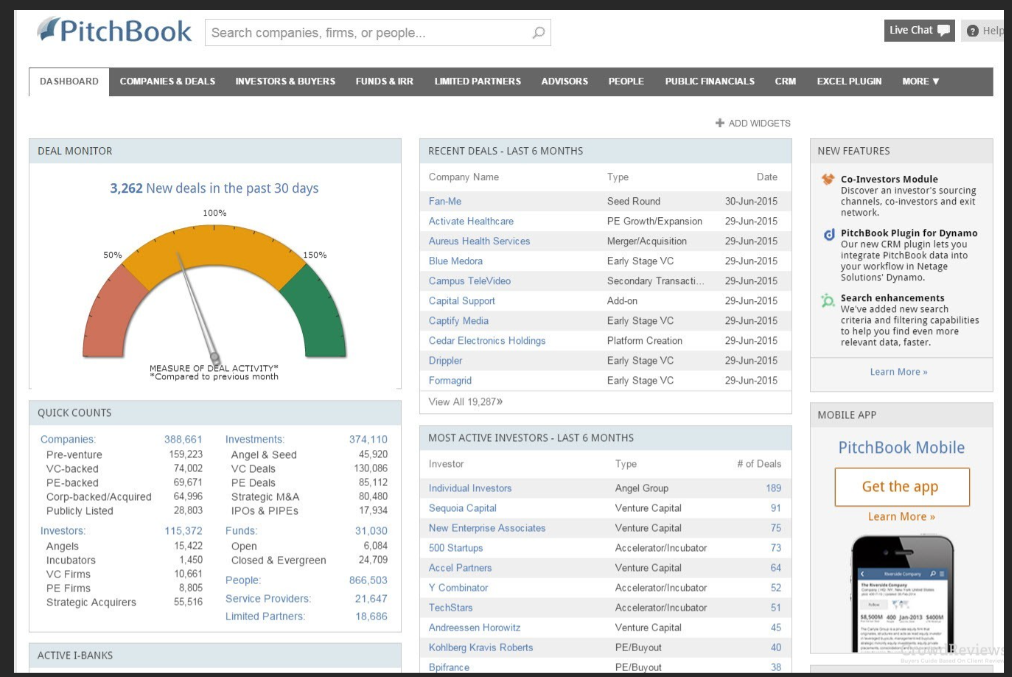
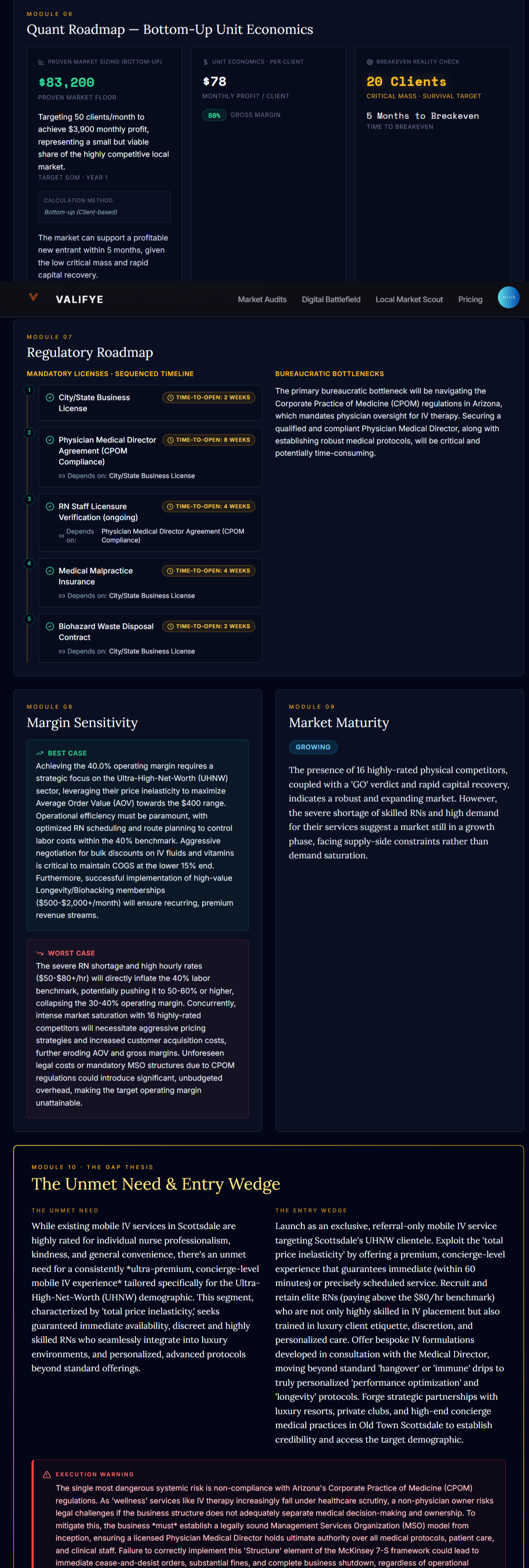
PitchBook catalogs deals that already closed — it cannot tell a pre-revenue founder whether their business model survives the next 90 days. Valifye audits your cash burn, regulatory exposure, and unit economics for $49. PitchBook is a history book for capital allocators. Valifye is live radar for founders still deciding.
The Interrogation
Fatal flaws Valifye uncovered.
Each flaw is a single, citable reason the incumbent fails for the specific operator profile Valifye audits for.
Retrospective Bias: A History Book Cannot Predict Your Survival
PitchBook's entire intelligence layer is backward-looking — funding rounds closed, exit multiples realized, LP commitments made, valuations assigned post-traction. Every data point in its system describes a company that already survived long enough to raise institutional capital. This creates a catastrophic selection bias for pre-revenue founders: the database contains zero information about the thousands of structurally identical companies that ran out of runway before their first check. Using PitchBook to validate a business idea is like navigating a minefield using only a map of where survivors walked — the lethal data is definitionally absent.
Institutional Resolution Gap: VC-Grade Aggregates vs. Founder-Grade Specifics
PitchBook aggregates intelligence at the deal, fund, and sector level — the resolution an institutional investor needs to make portfolio-level capital allocation decisions across hundreds of positions. A pre-revenue founder making a singular, irreversible, life-savings-level bet needs ground-truth specifics: their exact labor rate burden in their target county, their precise 90-day cash survival window at their specific COGS structure, their actual competitor density in their ZIP code. PitchBook cannot zoom to this resolution — its entire architecture is calibrated for investors running macro analysis, not founders running survival math on one company.
The $10,000+ Price Wall Punishes the Highest-Risk Decision-Makers
PitchBook licenses begin at approximately $8,000–$20,000+ annually, with enterprise tiers scaling further. The founders making the most consequential and irreversible financial decisions of their lives — quitting stable employment, signing commercial leases, committing personal savings, raising friends-and-family capital — are structurally priced out of the platform most associated with startup market intelligence. This creates a perverse information asymmetry: the investors who need the least protection from bad data have unlimited access, while the founders who need it most are left flying blind or borrowing fragments from blog posts.
The Forensic Matrix
Where the audit diverges.
| Feature | PitchBook | Valifye |
|---|---|---|
| 90-Day Operational Survival MathValifye models a founder's precise 90-day cash survival window using real local labor rates, category-specific SaaS COGS benchmarks, and pre-revenue ramp timelines. PitchBook tracks how much capital companies raised and at what valuation — it has no financial modeling layer for pre-revenue operational survival, because its data was built to serve investors analyzing companies that already have revenue, not founders trying to survive long enough to generate it. | No | Yes |
| Local Regulatory & Permit BacklogsValifye surfaces county-level permitting timelines, state-specific tax obligations, and local compliance friction before a founder commits to a location or entity structure. PitchBook operates at national and sector-level resolution — it tracks which states have active VC ecosystems, not which counties have 14-month health department backlogs that make a founder's pre-revenue cash position non-survivable. These are different instruments measuring different realities. | No | Yes |
| Pre-Revenue Pivot PlaybooksWhen Valifye's forensic audit identifies a fatal flaw — a non-viable CAC, a regulatory blocker, a cash gap — it generates a structured Pivot Playbook with recalculated unit economics for adjacent models. PitchBook documents pivots that already happened at funded companies and resulted in successful exits or notable failure events. It cannot generate a forward-looking, economics-based pivot protocol for a founder who has not yet committed capital — the tool has no failure-state intelligence layer. | No | Yes |
| Ground-Level Labor & COGS BenchmarkingValifye benchmarks real local labor rates and SaaS COGS structures specific to the founder's geography, business type, and operational configuration. PitchBook surfaces aggregated financial metrics from VC-backed companies — revenue multiples, EBITDA margins, growth rates — that reflect the cost structures of funded companies with institutional pricing power, dedicated HR functions, and economies of scale that a pre-revenue founder categorically does not have. Building a survival model on PitchBook's aggregated benchmarks produces a systematically optimistic P&L. | No | Yes |
| Indie-Focused GTM ArsenalValifye generates ICP-specific Mom Test discovery scripts, channel-sequenced GTM execution roadmaps, and tactical acquisition frameworks calibrated to a bootstrapped founder's budget and stage. PitchBook provides LP reports, service provider directories, and sector growth narratives — intelligence formats designed for institutional readers making portfolio decisions, not founders who need to know exactly which channel to activate first with $2,000 in marketing budget and 90 days of runway. | No | Yes |
| Independent Survival AuditValifye's forensic audit is structurally independent — it has no financial relationship with any investor, franchisor, or capital provider, and its outputs are calibrated exclusively to the founder's survival odds regardless of fundability. PitchBook's data is curated for and consumed by the institutional investment community — its framing, its metrics, and its analytical conventions are optimized for 'is this company fundable and at what multiple?' not 'can this founder survive without raising capital?' These are different questions with potentially opposite answers. | No | Yes |
The Kill Shot
PitchBook is the definitive history book of venture capital — meticulously cataloging every deal that already happened, every exit that already closed, and every company that already survived long enough to appear in a database, which is precisely what makes it useless for a pre-revenue founder who needs to know if they will survive the next ninety days. An early-stage founder paying $8,000 per year for retrospective deal data while remaining blind to their 90-day cash burn rate, their county's permitting backlog, and their unit economics viability is not doing market research — they are paying a premium to feel sophisticated while the real survival variables go completely unmeasured. Valifye is the live radar that PitchBook was architecturally incapable of becoming — not because PitchBook failed, but because it was never built to protect founders; it was built to serve the investors who fund them after the hard part is already done.
Pricing Gap
PitchBook: $8,000–$20,000+/yr (Retrospective VC deal data, LP tracking, exit multiples — zero pre-revenue survival intelligence) vs Valifye: $49 flat (Forensic survival audit: 90-day cash burn, local regulatory risk, unit economics, competitor density, GTM roadmap, and Pivot Playbooks)